2023 Spring UR Symposium (+ Jacque wins an Award!)
Our undergraduates have been very busy. Several of them travelled to Wisconsin for NCUR, presented at the NC State Undergraduate Research Symposium, and presented a talk at our year-end Abrams seminar, all in less than 2 weeks!
At the Undergraduate Research Symposium, we had:
- Kathryn: Characterization of Porous, Mineralized Collagen-Chitosan Scaffolds for use in a Bone-On Chip Platform (working with Sandra)
- Brooke: Effects of Brachial Plexus Birth Injury on Composition of Biceps, Supraspinatus, & Subscapularis Muscles (working with Kyla)
- Rose: Verifying Quality of Joint Reaction Forces Obtained from Musculoskeletal Models for Contact Finite Element Analysis of the Rat Shoulder Following BPBI (working with Jason)
- Amanda: Characterizing Architecture of a Biomimetic Bone Scaffold (working with Sandra)
- Katie: Gait Impairment in a Rat Model of Brachial Plexus Birth Injury (working with Kyla)
- Steven: Understanding Paw Preference Associated with Brachial Plexus Birth Injury (working with Kyla)
Amanda, Kathryn, Katie, and Brooke also presented their research at the Abrams Scholars Final Presentations.
In addition to the four above, Carter and Deeqa also presented at the Abrams final presentations:
- Carter: Characterization of a 3D biomimetic bone scaffold for in vitro examination of bone microenvironments (working with Sandra)
- Deeqa: Finite Element Analysis of Trabecular Bone Microstructure with Passive Joint Loads Following Brachial Plexus Birth Injury (working with Jason)
We’re also very proud to share that Jacque won the Michael Dickey Outstanding Research Mentor Award, which is presented annually at the Spring Undergraduate Research Symposium. This award recognizes an individual who has demonstrated excellence in mentoring and supporting undergraduate researchers. Winners of this award show a commitment to serving as a guide for undergraduate students as they move from directed to more independent work, creating opportunities for them to develop advanced technical and soft skills, encouraging then to share their research publicly, supporting underrepresented students, and offering academic and career advice for their mentees. Jacque was nominated by our lab’s undergrads for everything that she does for them and for the lab.

NCUR 2023
In 2023, the National Conference on Undergraduate Research (NCUR) was held in Wisconsin at UW-Eau Claire. OML usually is well-represented at this event, but this year we practically took over! Brooke, Deeqa, Katie, Kathryn, Amanda, and Steven all represented OML and NC State this year. They had talks and posters and pretty much knocked it out of the park. We’re so proud!


Summer Undergraduate Research Symposium
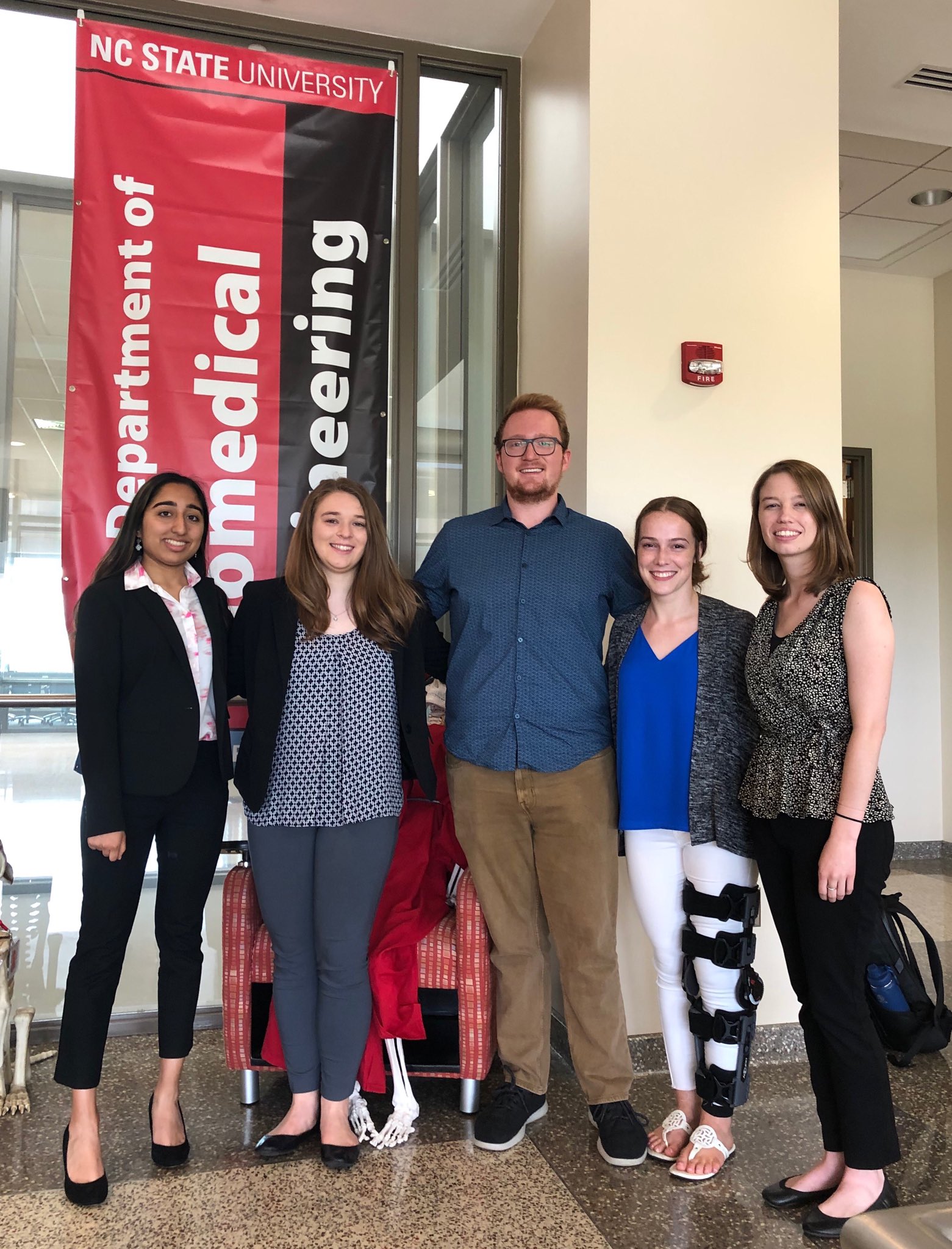
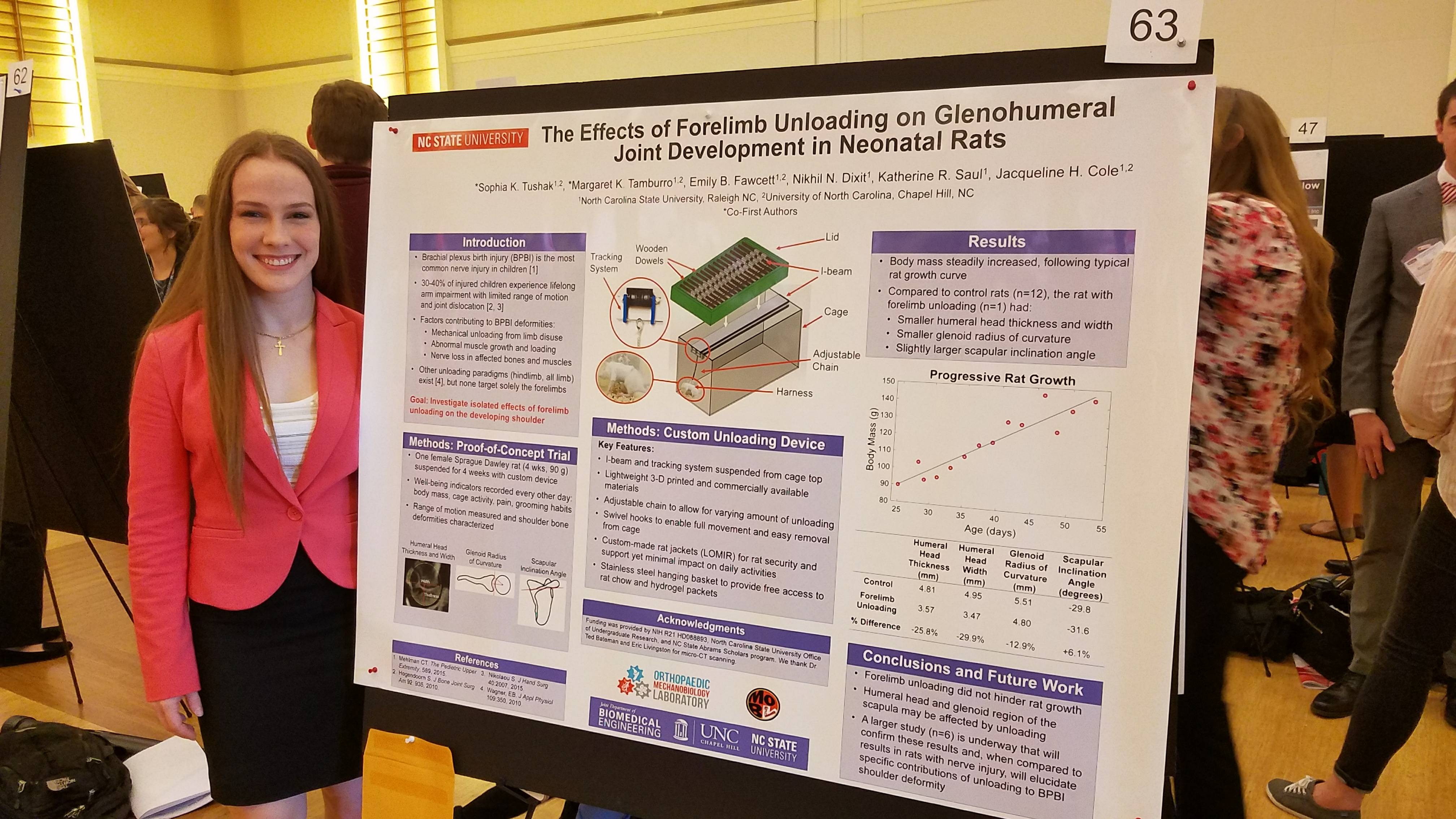
We had a whopping 6 undergrads present at the 2022 Summer Undergraduate Research Symposium! Or maybe only five, technically, since Christina is technically part of Kate Saul’s Lab. We’re so proud of all of them.


Spring OUR Symposium
We had two undergrads present posters at the Spring OUR (Office of Undergraduate Research) symposium. Kathryn presented her research with Sandra to optimize the Bone-On-Chip device, and Deeqa talked about her Finite Element Modeling work with Jason. Great job ladies!


Jennifer Wins a Departmental Research Award
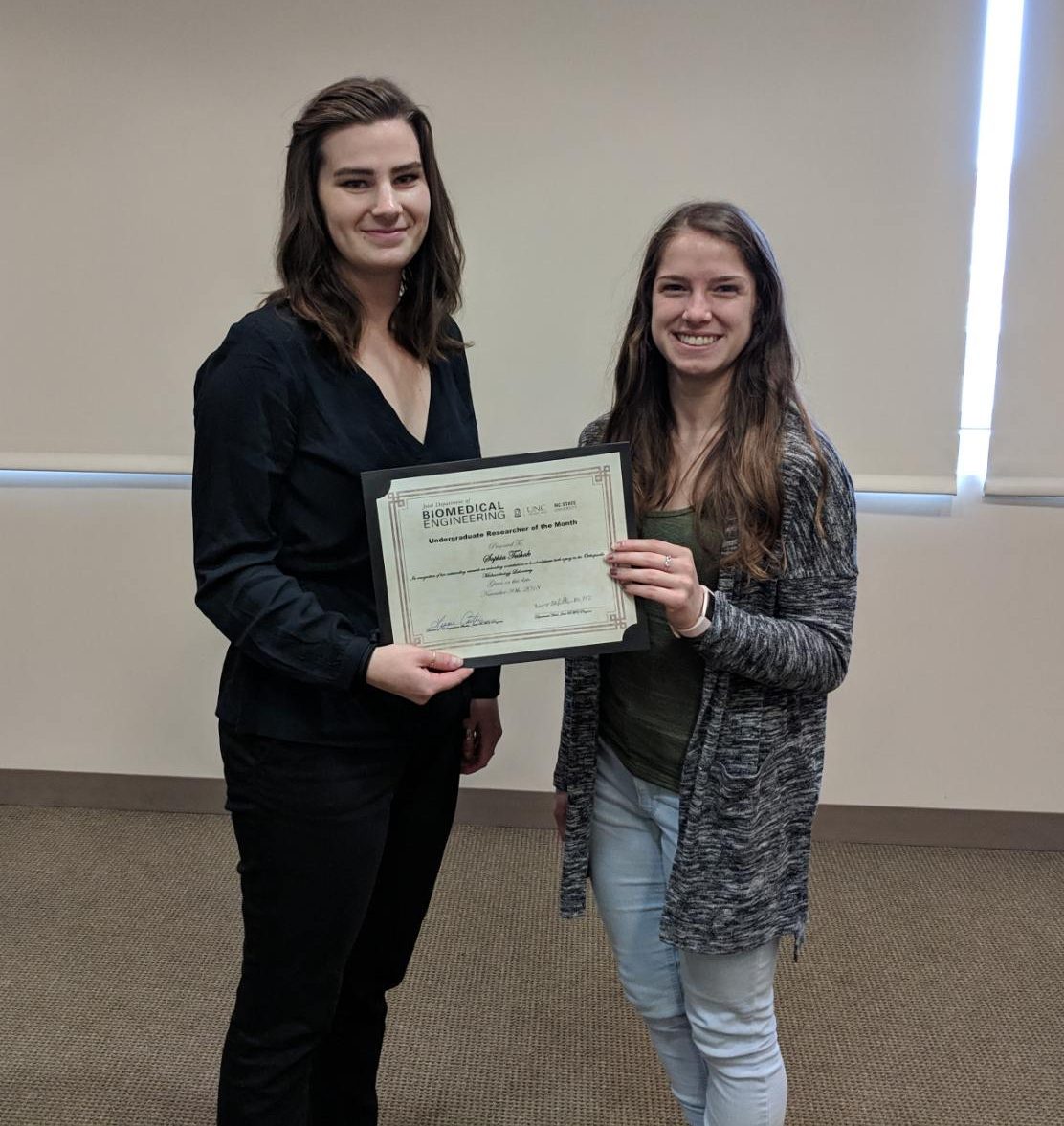
Jennifer, one of our long-time undergrads, was recently awarded the BME Excellence in Undergraduate Research Award for her outstanding work done in OML. We’re so proud of her, but also so sad that we’re going to lose her in the spring as she graduates and moves on to bigger and better things.
Per the announcement, “The goals of these awards include: giving students formal recognition to support their next steps (graduate school applications, job applications, etc.); and promoting a culture of BME undergraduate students thriving within research laboratories across both campuses. [These] students have gone “above and beyond” to make significant contributions to their research labs.”
Check out the announcement here: https://bme.unc.edu/bme-excellence-in-undergraduate-research-awardees/
2021 SNCURS Event
We had three students participate in the 2021 SNCURS (State of North Carolina Undergraduate Research Symposium) Event.
You can check out their talks/posters on the website, at least for now (we have no idea how long things will stay available, so we’ve included the link within the symposium and also a direct link to the YouTube video):
- Deeqa talked about her research using the Individual Trabecular Segmentation (ITS) software to analyze trabecular bone-like microstructures: YouTube video
- Kathryn spoke about her work developing a mechanism to study bone-vascular interactions: YouTube video
- Jennifer spoke about her research into the effects of BPBI on gait and grip strength: [no YouTube video, but poster is below]
2021-2022 Abrams Scholars Announced
The 2021-2022 cohort of Abrams Scholars was recently announced. Four of our amazing undergrads were named as Abrams Scholars: Kathryn, who is working with Sandra on her Bone-On-Chip project; Jennifer, who is working with Kyla on the BPBI project; and Vince and Deeqa, who are both working with Jason on Finite Element Modeling.
Here are their project titles:
- Kathryn: Development of a bone-on-chip platform to examine effects of post-
stroke inflammation on bone-vascular interactions - Jennifer: Effect of Brachial Plexus Birth Injury on Limb Use and Muscle Strength
- Deeqa: Analyzing the effect of heterogeneity on trabecular bone tissue
microdamage in finite element models of varying resolution - Vince: Optimizing nonlinear finite element analyses of vertebral trabecular bone
Summer Undergraduate Research Symposium
Two of our undergraduates presented their work at the Summer Office of Undergraduate Research Symposium.


Our Amazing Undergrads
Our undergrads have been busy the last 8 months!
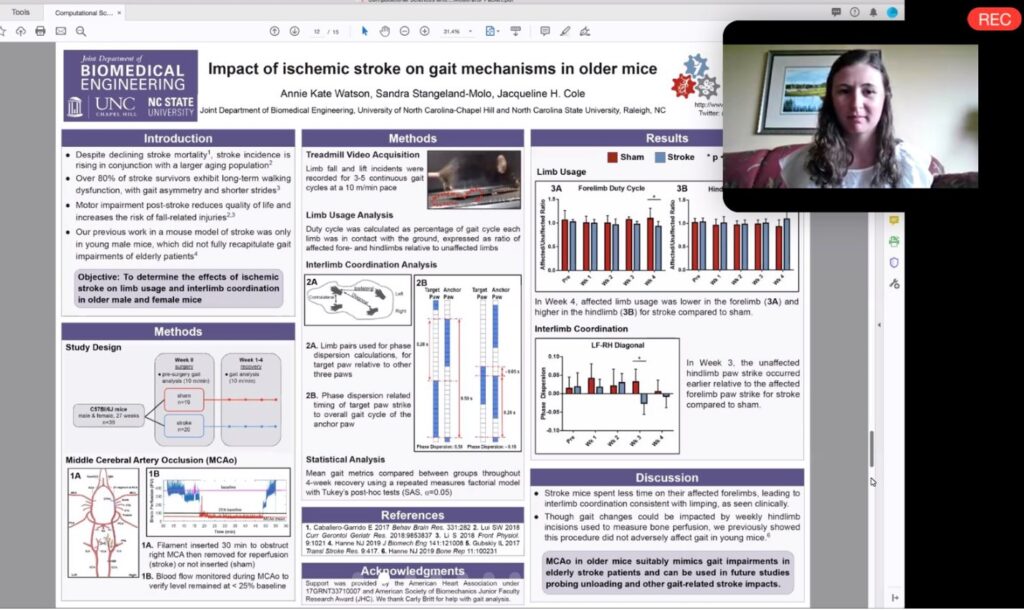
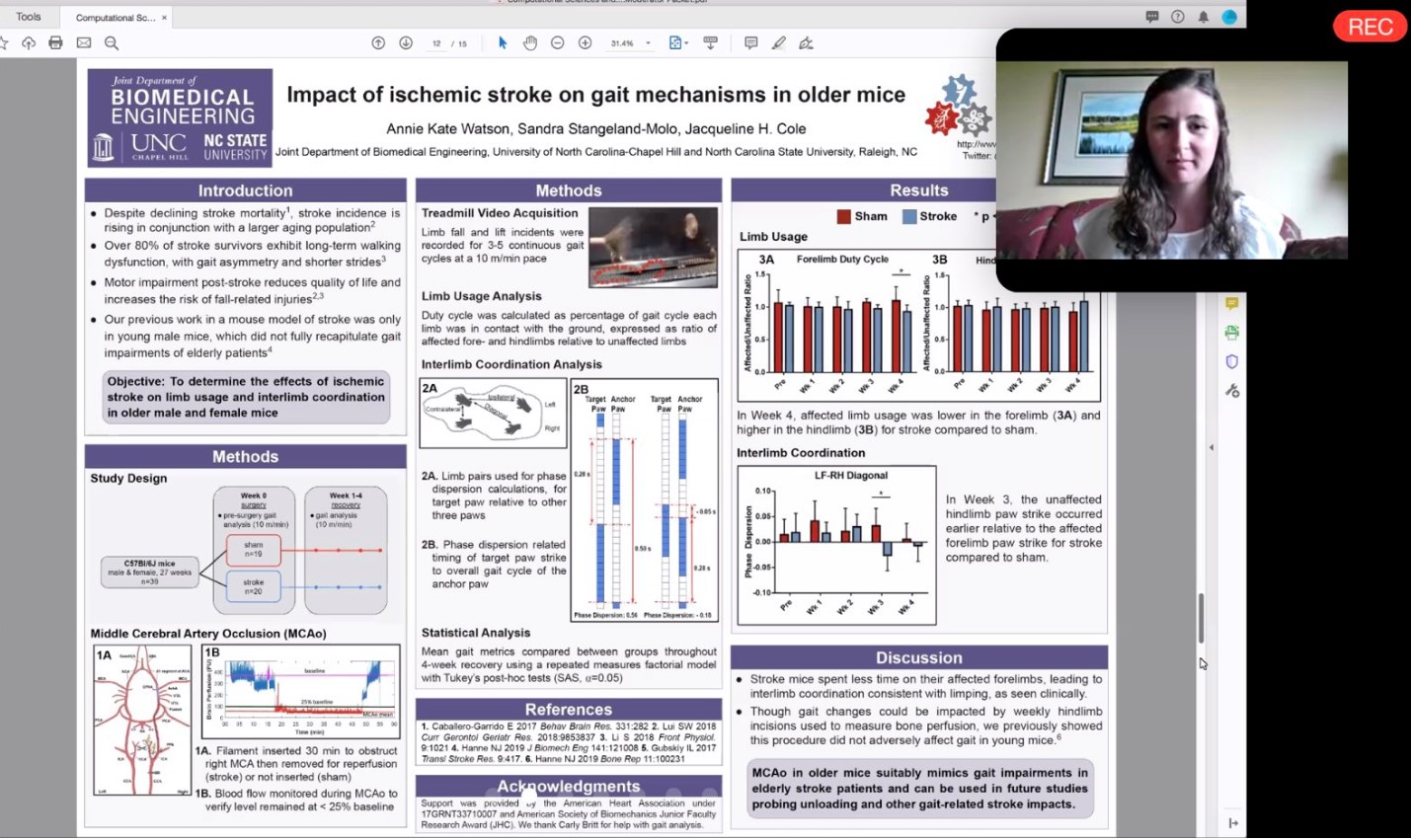
- Jennifer, and Josh presented at the Spring OUR Symposium in April. Due to COVID they presented a virtual poster, and did a great job! Jennifer presented on her work with Emily: Location of Brachial Plexus Birth Injury Deferentially Affects Humeral Bone Growth. Josh presented on his collaboration with Jason: Increasing Computational Throughput of Heterogeneous Bone Tissue Models
- Four of our undergrads were selected as Abrams Scholars: Annie Kate, Vince, Jennifer, and new lab member Kathryn. Annie Kate and Kathryn will be working with Sandra on her bone-on-a-chip project, Vince will continue his work with Jason, and Jennifer will continue to work with Emily. Abrams Scholars are outstanding BME undergraduate students who are selected to receive a stipend to conduct hands-on laboratory research projects. These projects are conceived and designed by the students with the guidance of a faculty mentor. The Abrams Scholar program honors C. Frank Abrams, Jr., a BME and BAE emeritus faculty member. Dr. Abrams led the development of the first courses in Biomedical Engineering at NC State and was instrumental in the founding of NC State’s BME Department, the creation of the joint UNC-CH/NC State graduate program, and ultimately the launch of the UNC-CH/NC State Joint BME Department. He was the Joint Department’s first senior design instructor as well as the first Director of Graduate Studies.
- Four of our undergrads were awarded OUR grants: Vince and Jennifer for the fall semester and Annie Kate and Deeqa for spring 2021.Vince’s project, Optimizing finite element analysis of cancelous bone through microdamage simulation, will support his project working with Jason. Jennifer will continue her work on the BPBI project: Effects of BPBI on humeral bone metabolism. Deeqa will also work on the BPBI project: Effect of BPBI on muscle-bone crosstalk. Annie Kate will be working with Sandra: Examining bone-vascular interactions post-stroke using a bone-on-chip platform.
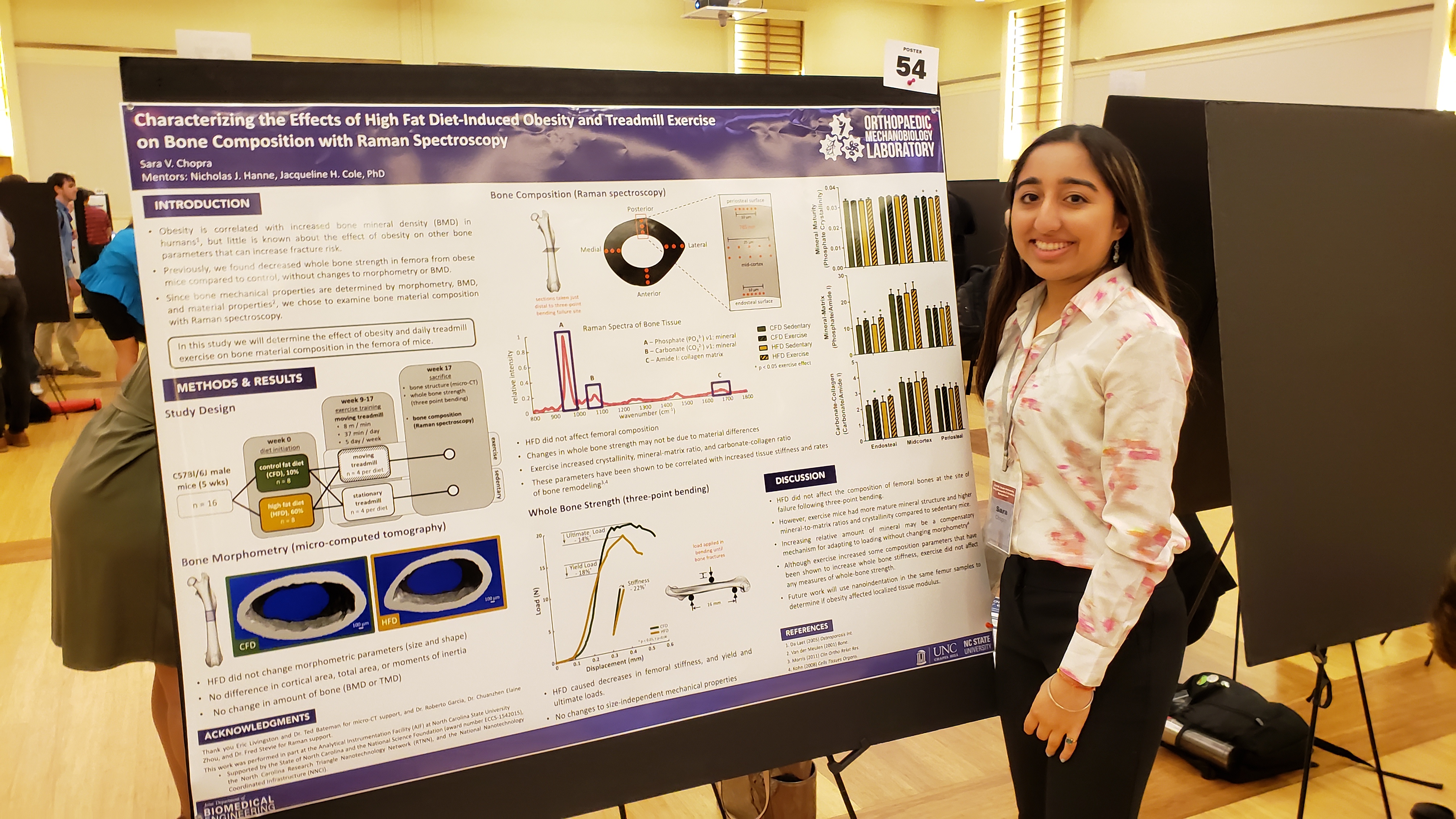
2019-2020 Abrams Scholars
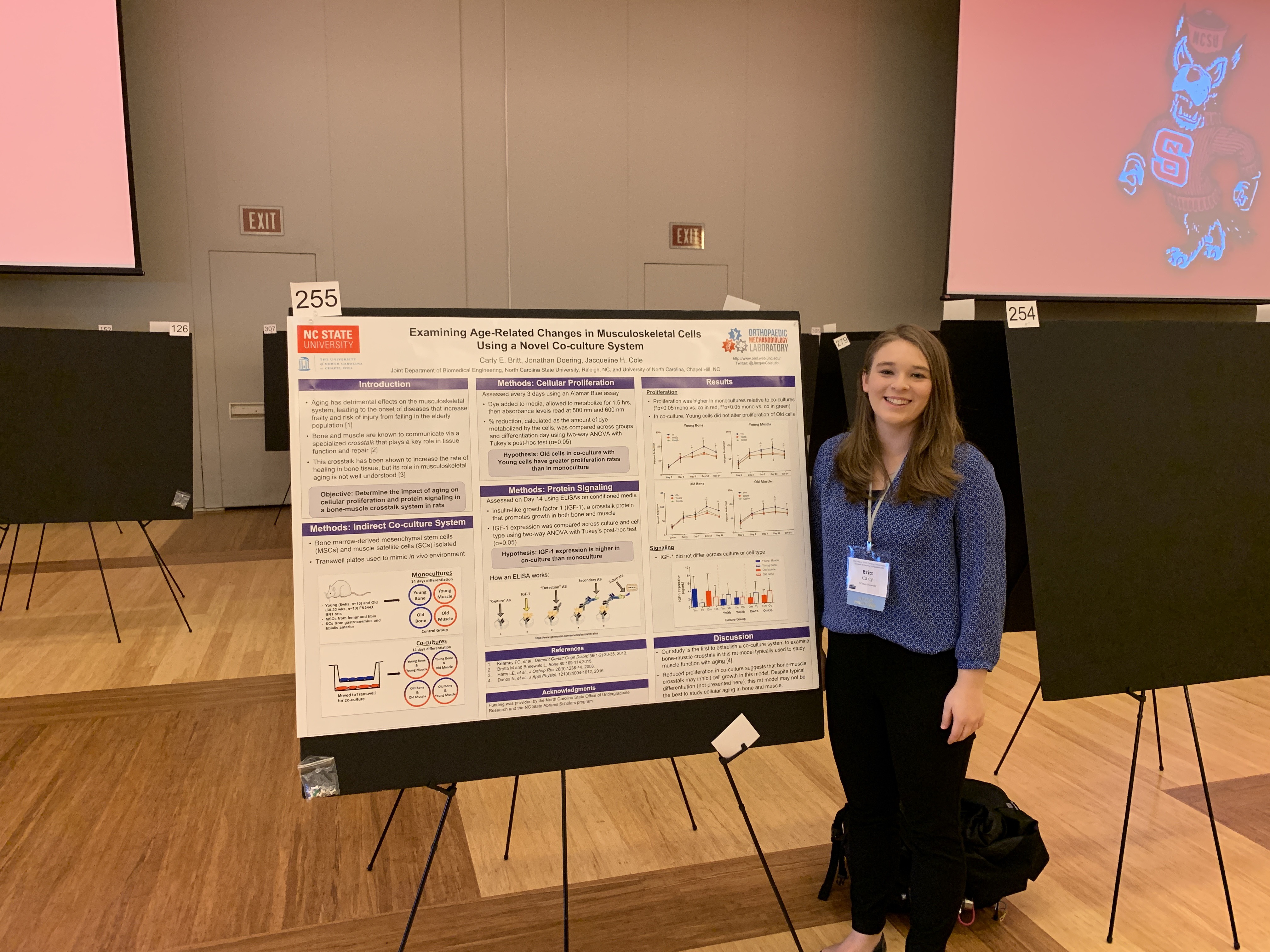
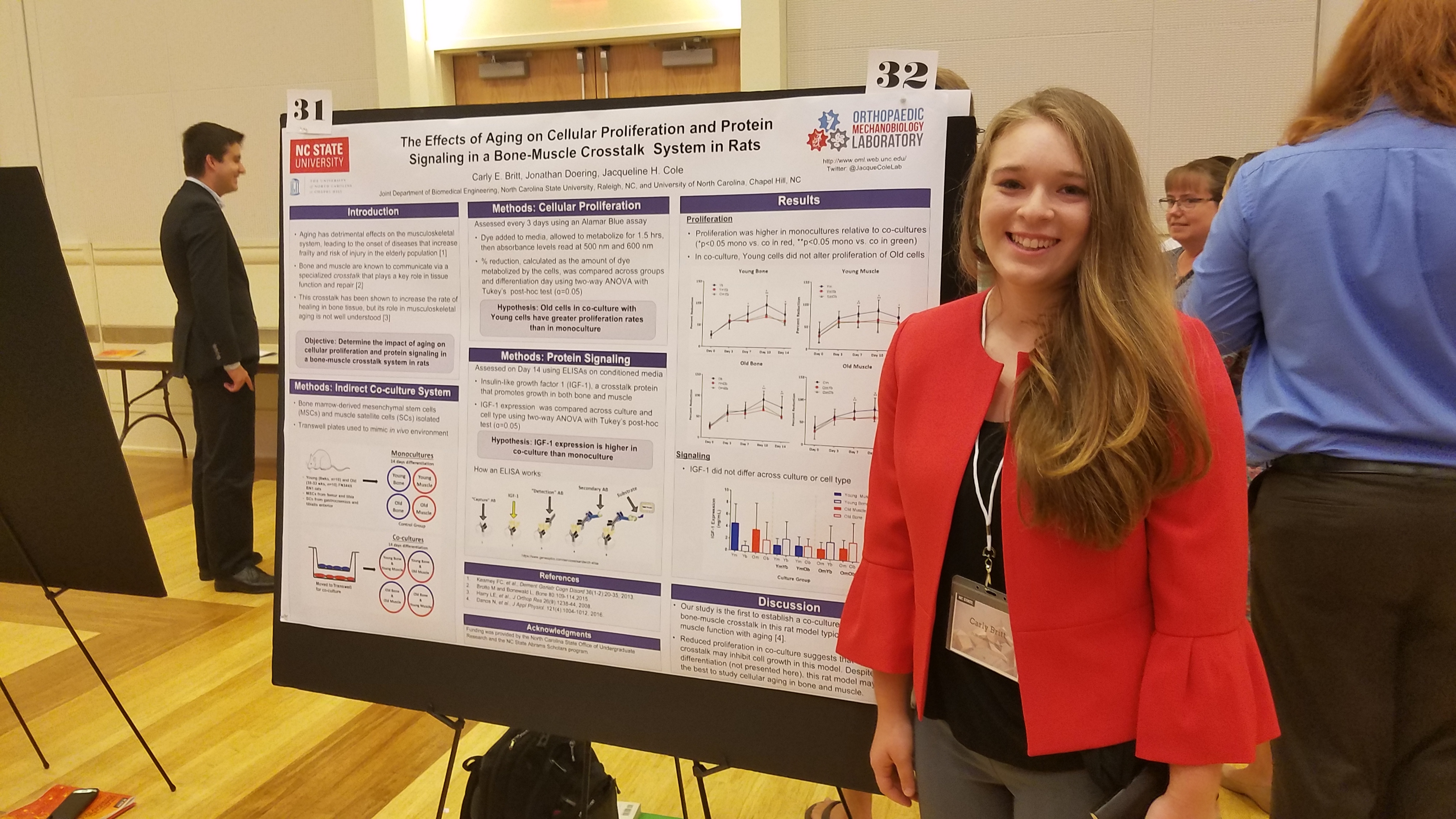
Congratulations to Carly, Josh, and new lab member Jennifer Potts, who were both selected as Abrams scholars for the 2019-2020 academic year.
Carly will be working with Sandra on the OV project:
Assessing functional recovery following ischemic stroke: Following stroke, hip fractures occur 2-4 times more frequently than with typical aging, yet bone health is not typically monitored during rehabilitation. Stroke may alter osteovascular (within bone) circulation, which is essential for bone maintenance, and thus may contribute to the bone loss. Exercise stimulates vascular formation and improves balance and musculoskeletal strength and thus may at least partially offset the negative impacts of stroke. Conversely, bedrest during recovery may exacerbate bone loss and could have detrimental effects on vascular function. The goal of this project is to measure blood flow in the tibia following ischemic stroke in mice, and to monitor functional recovery throughout the experiment. Blood flow will be measured weekly in the tibia with a minimally invasive laser Doppler flowmetry procedure. Functional recovery will be quantified with a behavior test and with high-speed video assessment of gait kinematics.
Josh will be continuing his work with Jason:
Effects of tissue heterogeneity on vertebral bone mechanical properties: This project will involve creating (with guidance) finite element models of human vertebral bone using the cancellous bone architecture from micro-computed tomography scans. The micro-CT scans also provide an accurate, 3D representation of tissue mineral density throughout the bone volume, which can readily be converted into elastic modulus values using experimentally derived density-modulus relationships. The goal is to create high-resolution bone models with realistic heterogeneous material properties and then use the models to determine how mineral heterogeneity impacts the overall mechanical performance of vertebral bone. This information is especially important, given that the heterogeneity of bone changes with aging and with certain drug treatments and thus may be an important metric to monitor or target.
Jennifer will be working with Emily on the BPBI Project:
Bone formation and mineralization following brachial plexus birth injury: Brachial plexus birth injury (BPBI) is the most common nerve injury in children, occurring during difficult childbirth. It causes muscle paralysis, deformities in the humerus and scapula as they grow, and lifelong impairment of arm function. Little is known about the bone growth and mineralization that may contribute to the advancement and persistence of BPBI-related impairments. The project will examine changes in cortical bone growth (e.g., mid-diaphysis of the humerus) using dynamic histomorphometry. Specific tasks will include embedding bone, sectioning, and analyzing images. Results from this project will help us determine underlying changes in bone formation and mineralization with BPBI, which will inform the development of future treatments to mitigate joint deformities and maintain arm function.
About the Abrams Scholars Program:
Abrams Scholars are outstanding BME undergraduate students who are selected to receive a stipend to conduct hands-on laboratory research projects. These projects are conceived and designed by the students with the guidance of a faculty mentor. The Abrams Scholar program honors C. Frank Abrams, Jr., a BME and BAE emeritus faculty member. Dr. Abrams led the development of the first courses in Biomedical Engineering at NC State and was instrumental in the founding of NC State’s BME Department, the creation of the joint UNC-CH/NC State graduate program, and ultimately the launch of the UNC-CH/NC State Joint BME Department. He was the Joint Department’s first senior design instructor as well as the first Director of Graduate Studies.